Built by traders and asset operators
The models are built by people who have traded energy, financed projects and operated assets. The assumptions come from how these markets behave in practice.
Model standalone BESS, solar+storage, and wind+storage economics in one platform. Set up in one day, evaluate scenarios in minutes.
Price curves, grid restrictions, business case, optimizer performance. Four separate products, all reading the same market data and the same scenario set.
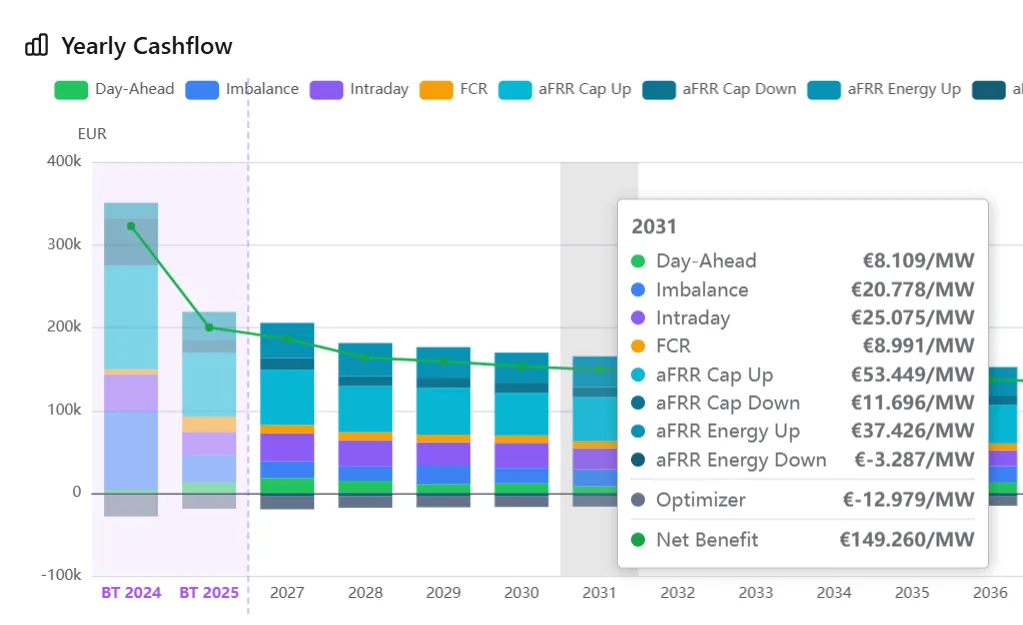
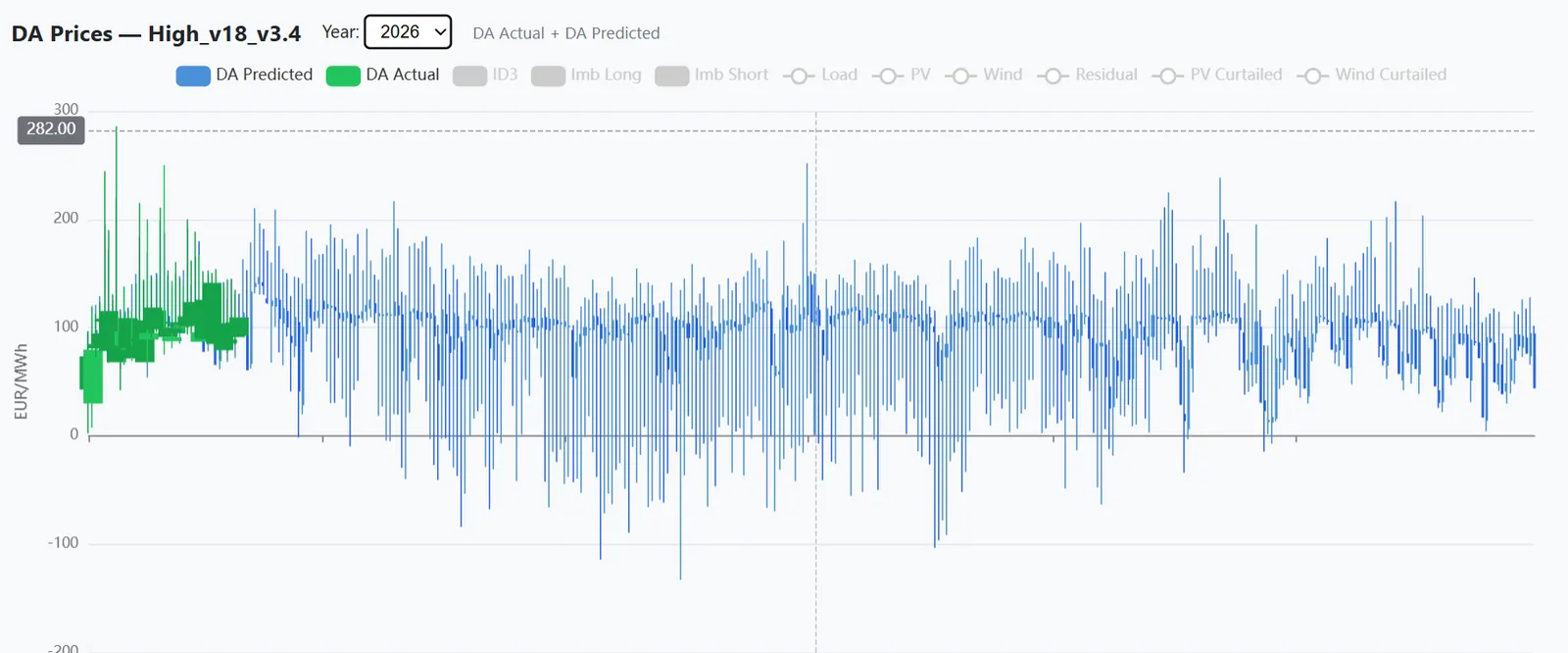
Forward price curves to 2050, at 15-minute resolution, for every market a battery earns in. One consistent scenario set behind all your revenue assumptions.
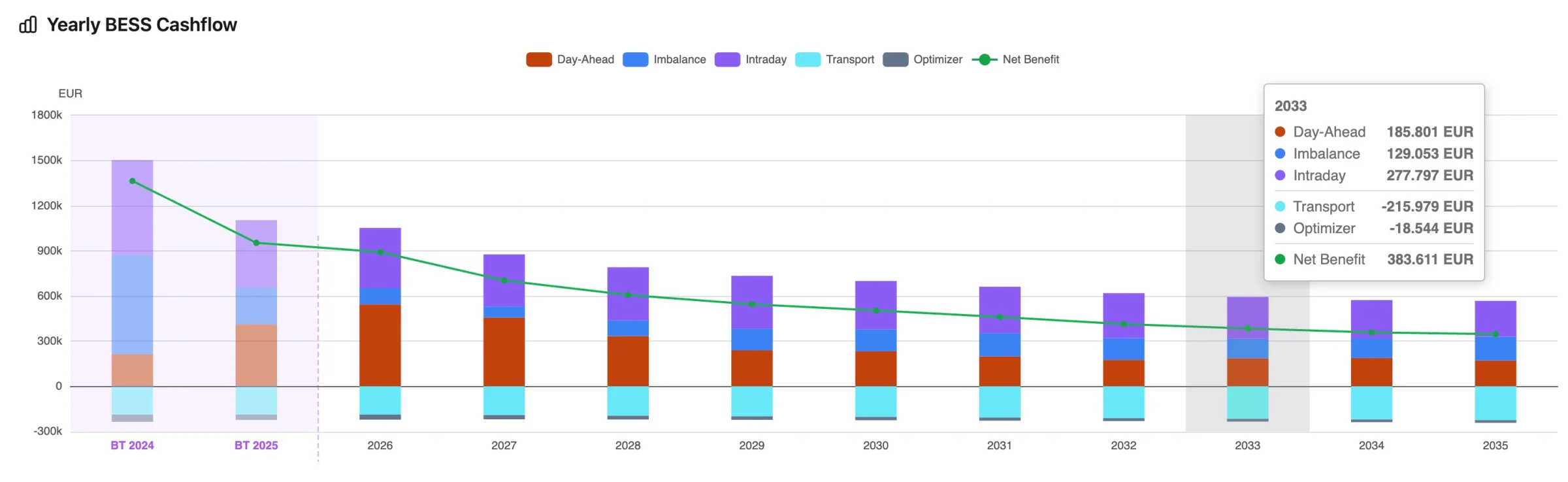
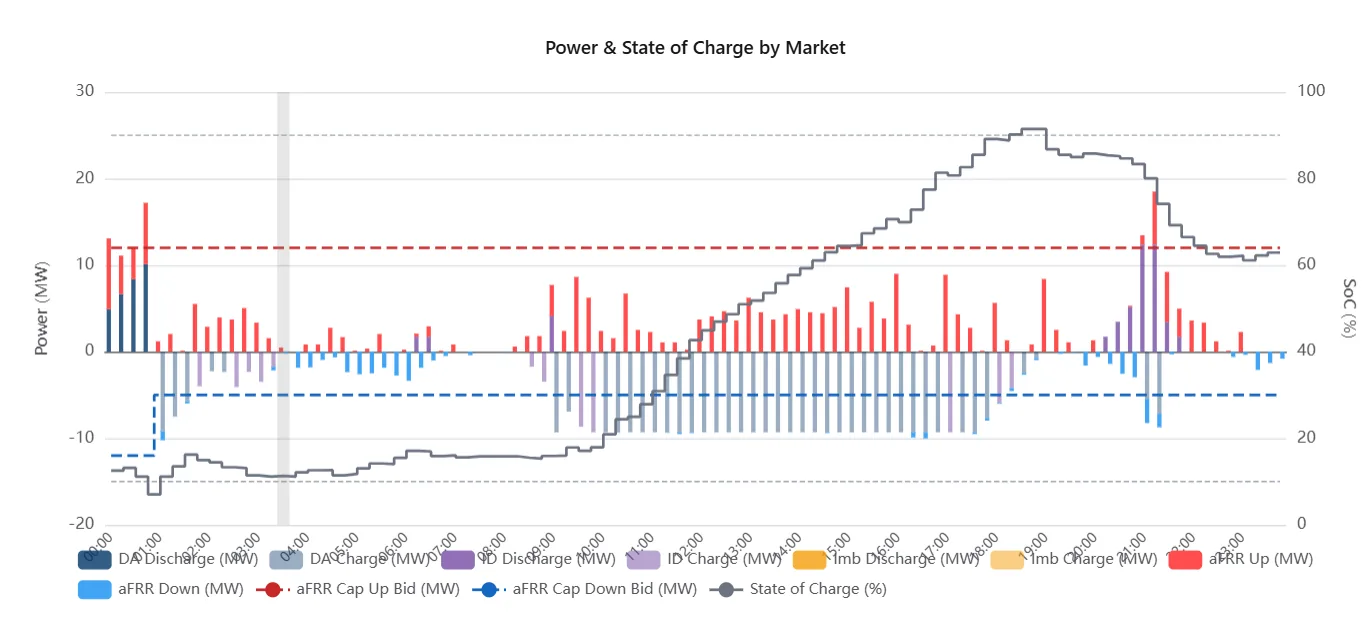
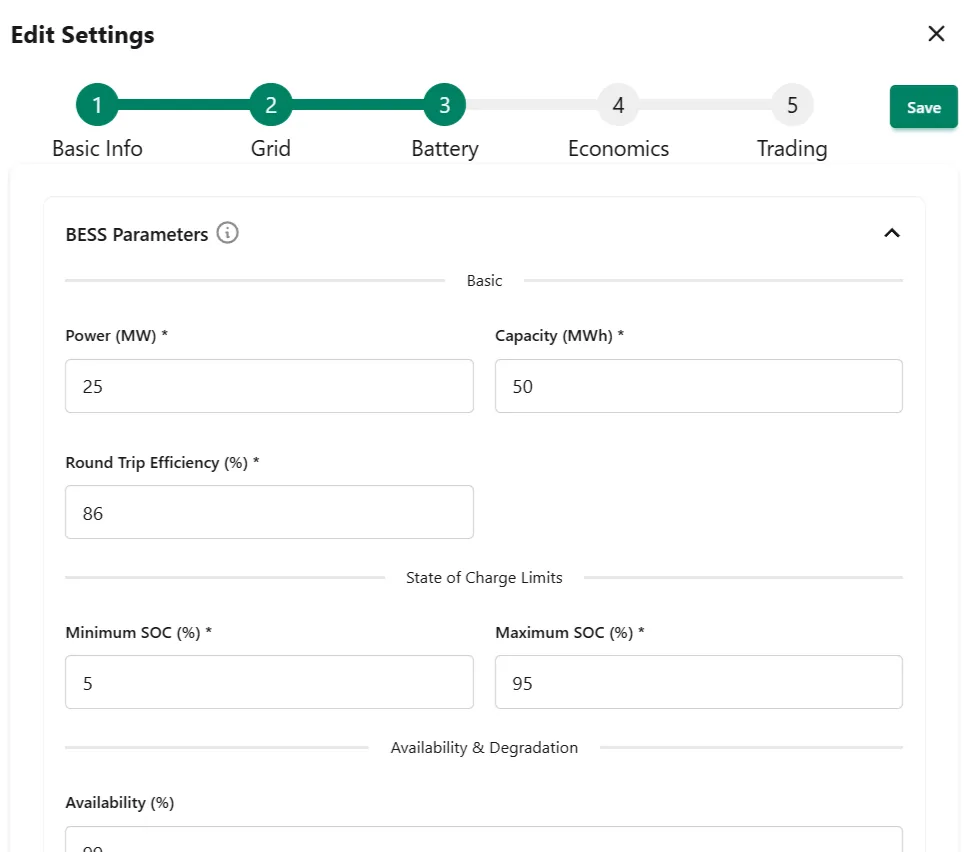
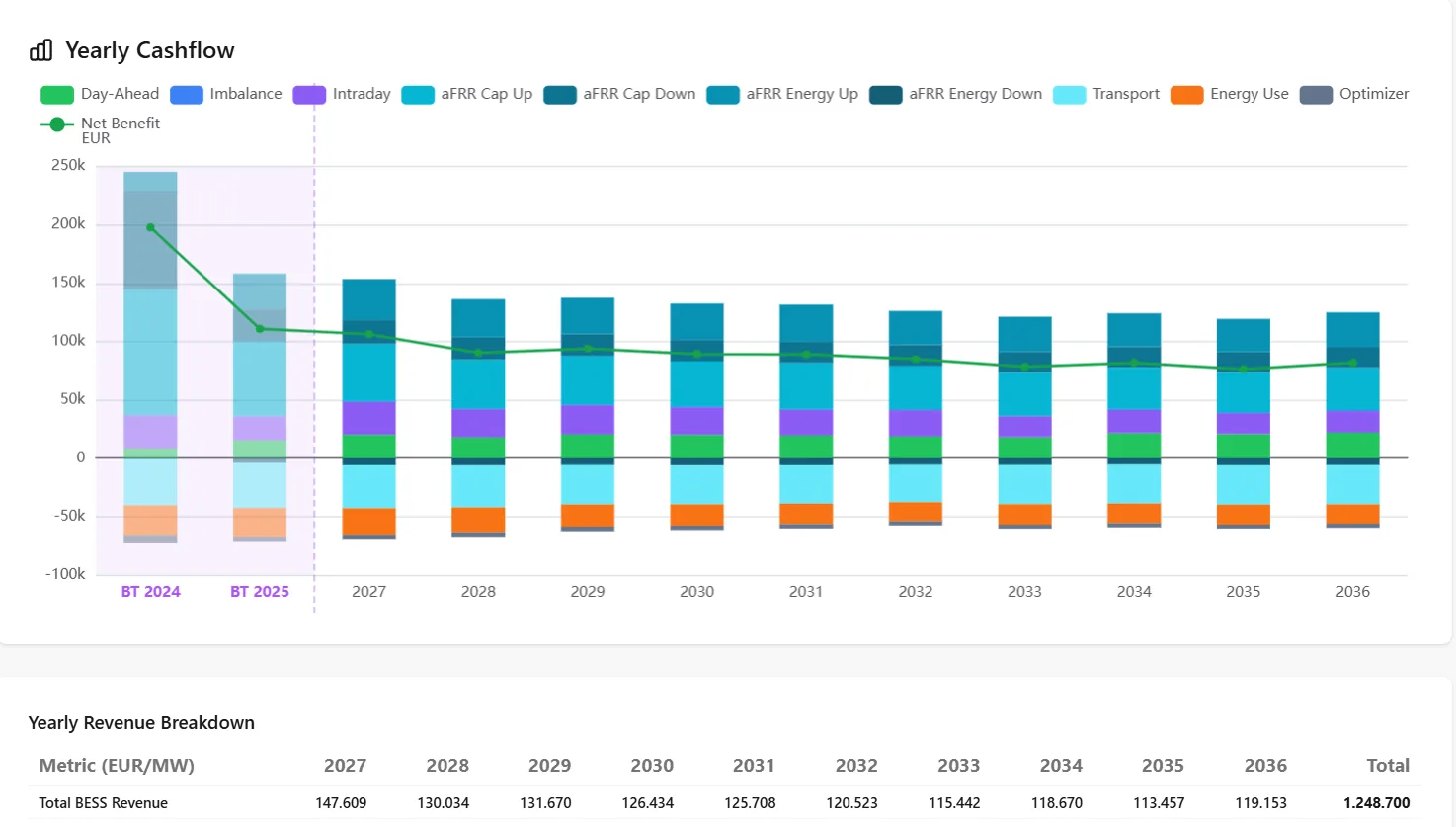
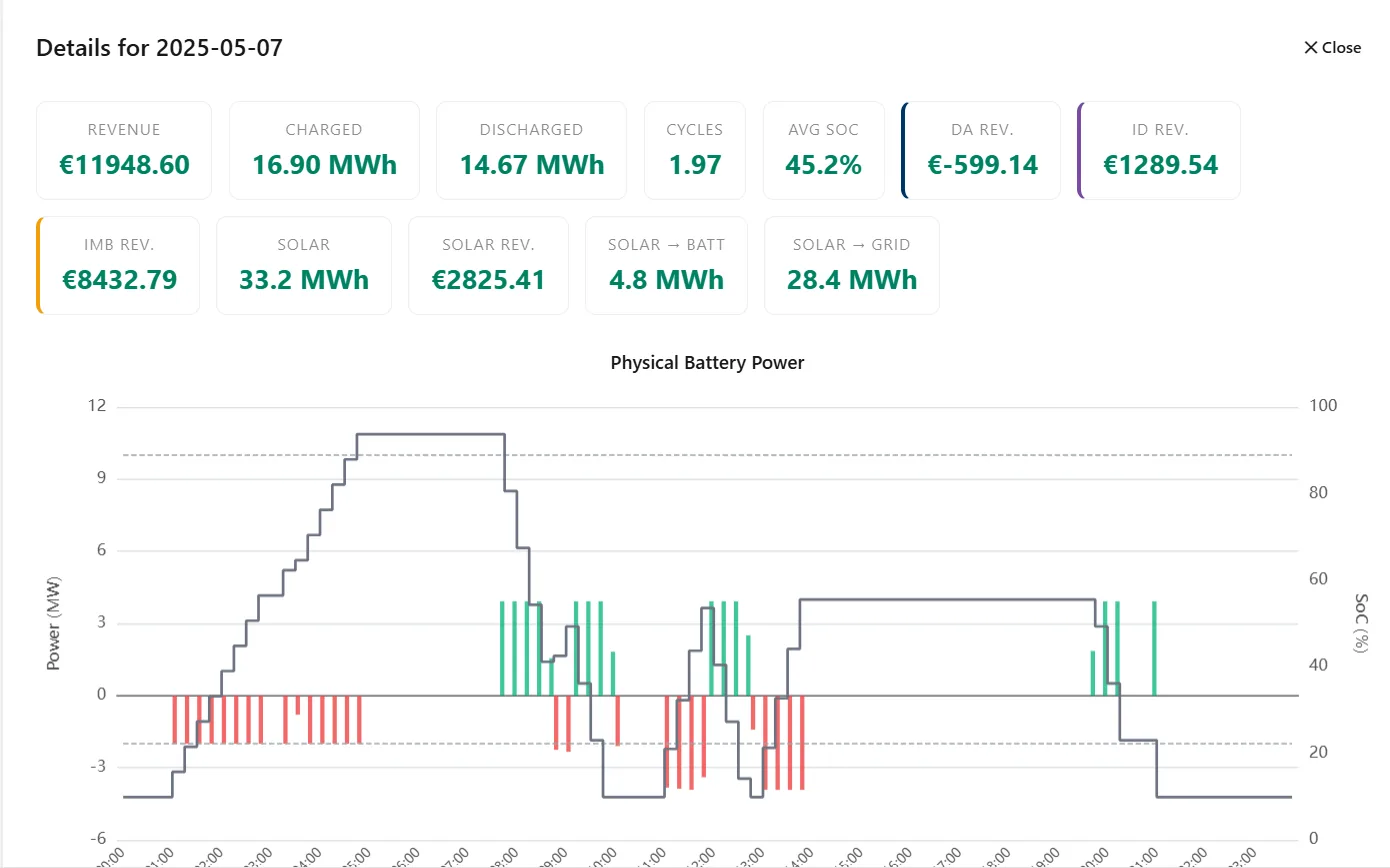
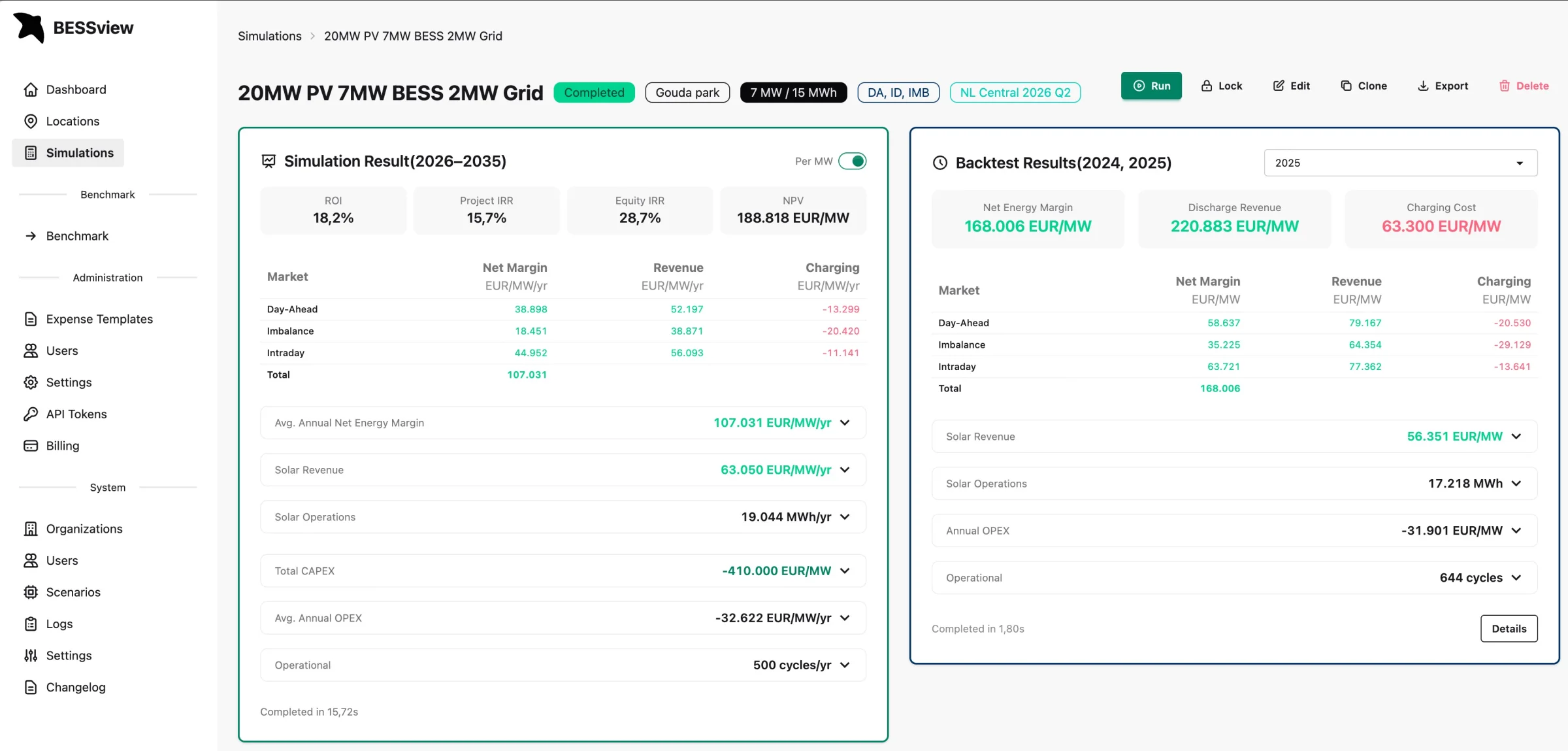
Sizing and revenue simulation for standalone and co-located BESS. BESSview optimizes dispatch on real time series, including the grid limitations, tariffs and losses that make or break the case.
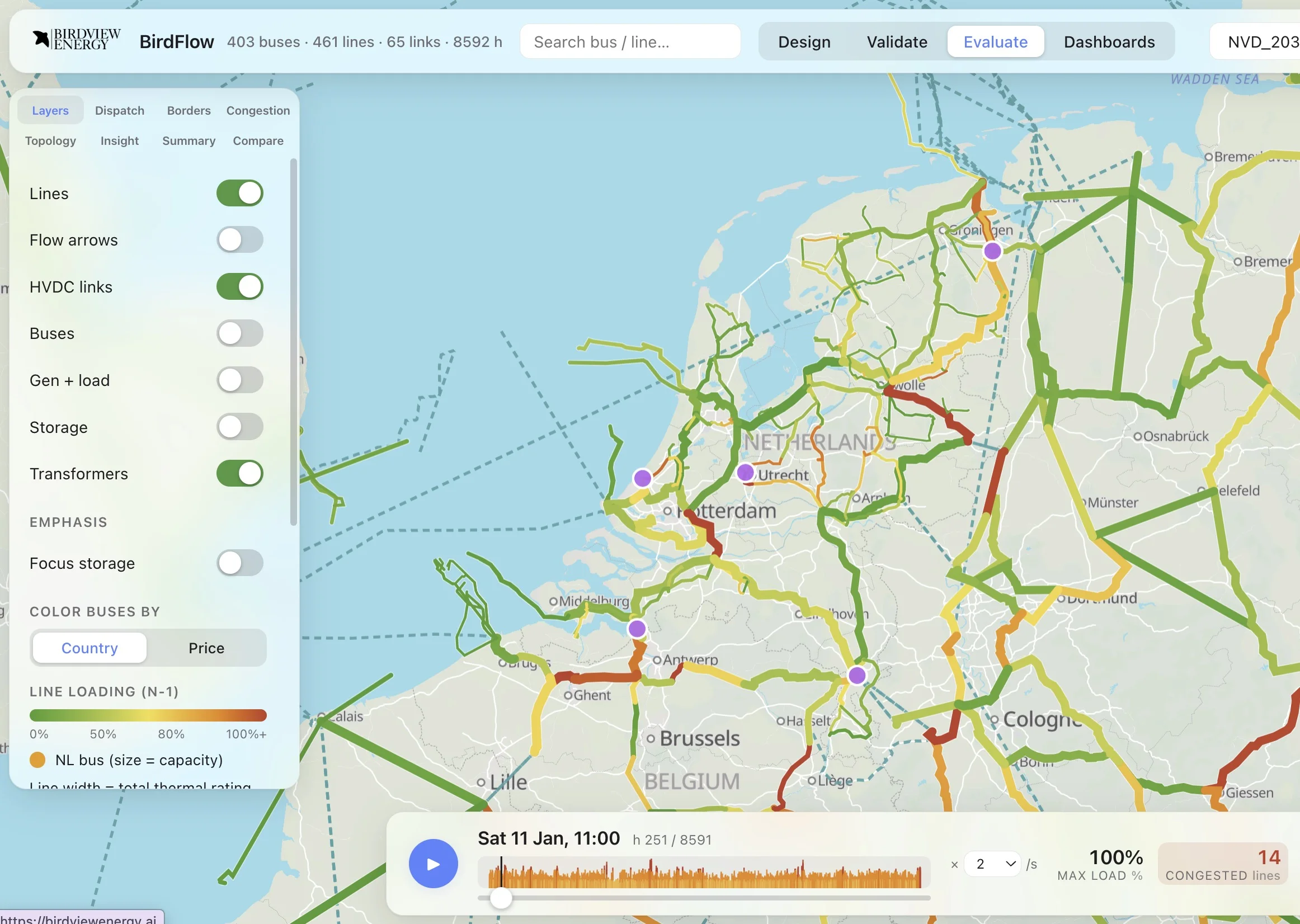
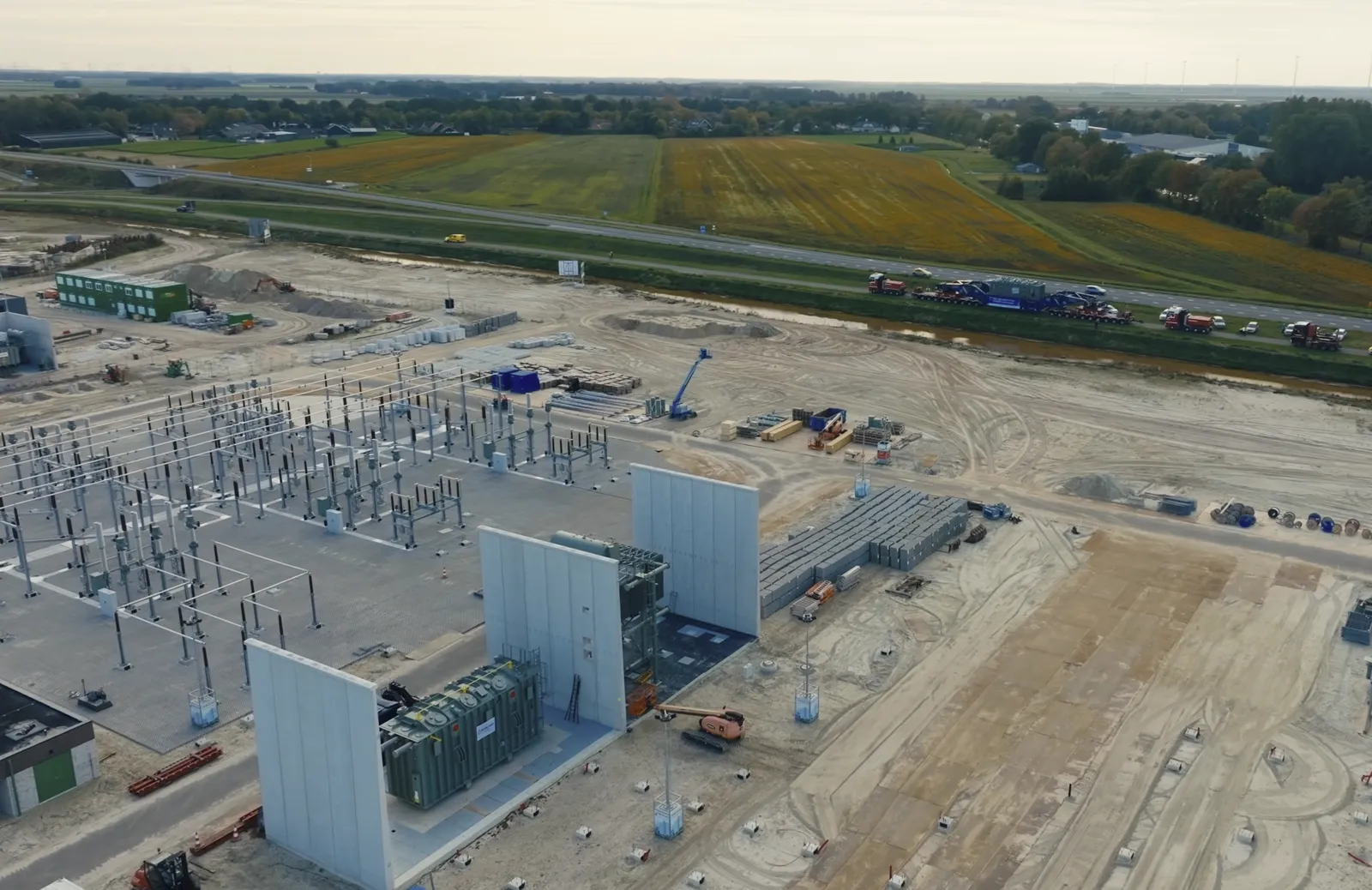
A high-resolution grid congestion model built on PyPSA-NL. BirdFlow estimates the expected hourly grid restrictions from 2027 onwards, so BESS, datacenter and industrial projects know what their connection will actually deliver.
The PowerFlow web interface shows the full Dutch grid, every hour of the year
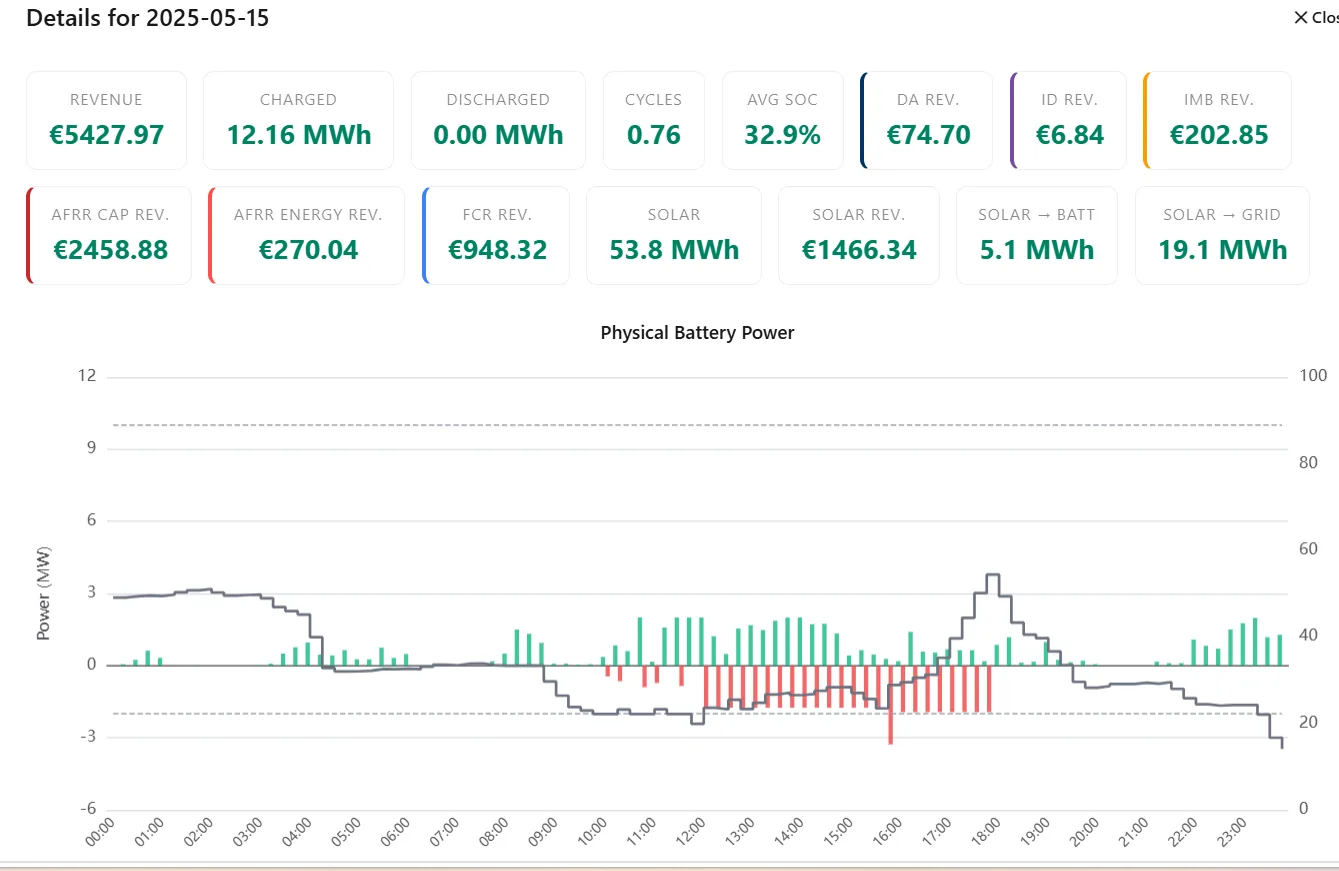
Independent benchmarking of the party trading your battery. We backtest your site against the theoretical maximum revenue it could have earned, then report what share of that your optimizer actually captured. On a 10 MW / 40 MWh asset in 2025 that capture ratio was 61 percent.
In development: live signal capture, so competing optimizers can dry-test on your asset in parallel without ever touching it.
Specify your site: grid connection, consumption profile, co-located assets, and local market. We calibrate a model to your exact configuration within one day.
Adjust sizing, duration, dispatch strategy, and revenue stacking across DA, ID, FCR, aFRR, and imbalance markets. Compare outcomes instantly.
Export revenue projections, sensitivities and risk assessment as a PDF report for lenders.
Partners, members and clients
Every number in the platform traces back to the settled series it was built from: EPEX day-ahead and intraday prices, and TenneT imbalance, aFRR and FCR settlement data. Each result can be checked against those inputs.
The model runs on your connection capacity, your local congestion profile and the tariffs that apply at your site.
Change the sizing, the price curve or the dispatch strategy and the run finishes in minutes, so you can find out what the case actually hangs on.
Your grid connection, your local congestion profile, your co-located generation and the regulatory constraints on your site all go in as parameters, not as defaults.
The models are built by people who have traded energy, financed projects and operated assets. The assumptions come from how these markets behave in practice.
DA, intraday, FCR, aFRR, imbalance, across NL, DE, RO and expanding. Every revenue stream is modelled on real market data.
Measure an operating battery against the theoretical maximum revenue its own site could have earned, and see what share the optimizer actually captured.
Masterclass
7
October 2026
09:30 to 17:00 · full day
Only 20 seats
A full day, across eight sessions, on what a congested grid does to a project: TDTR/VVTR restrictions, non-firm connections (ATO), and the revenue impact on PV, BESS and hybrid projects. For developers, investors and lenders who need to price the grid correctly.
Request a 30-minute demo and we come back with a sample output for your own configuration.