
Dutch grid congestion analysis for TDTR and VVTR
BirdFlow calculates hourly power flows on the full Dutch transmission grid, with the neighbouring systems modelled as boundary conditions, and turns them into the expected hourly grid restrictions per location. The horizon is yours to set. 2038 is the standard run and 2045 is available, at the cost of a wider error band the further out you look. So BESS, datacenter and industrial projects know what their connection will actually deliver, before they commit.
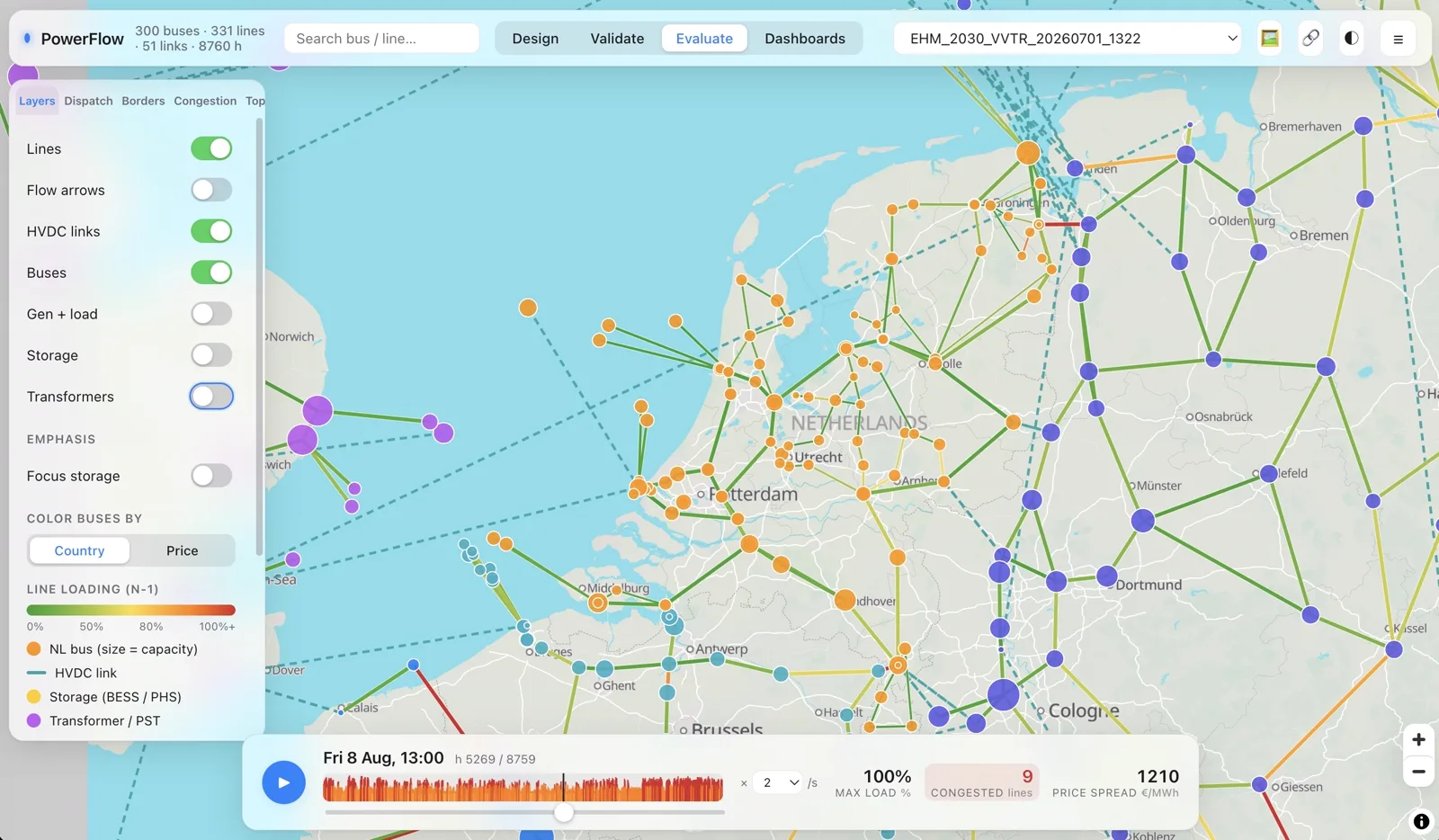
The BirdFlow web interface: 300 substations, 331 HV lines, 51 HVDC links, every hour of the year on an interactive map
How BirdFlow models congestion
Congestion is the physical outcome of topology, demand and generation. BirdFlow models all three, then simulates the power flows that follow.
The grid as it is, and as it will be
BirdFlow starts from the complete Dutch transmission network, built on PyPSA-NL: every 380, 220, 150 and 110 kV line, substation, transformer and HVDC interconnector. On top of that we layer the announced grid reinforcements (new circuits, transformer capacity, offshore wind landings), each in its expected commissioning year, so every future year is simulated on the grid that will actually exist by then.
- Full 380/220/150/110 kV topology, substation by substation
- TenneT investment plan: upgrades in their commissioning year
- Offshore wind landing routes and interconnectors included
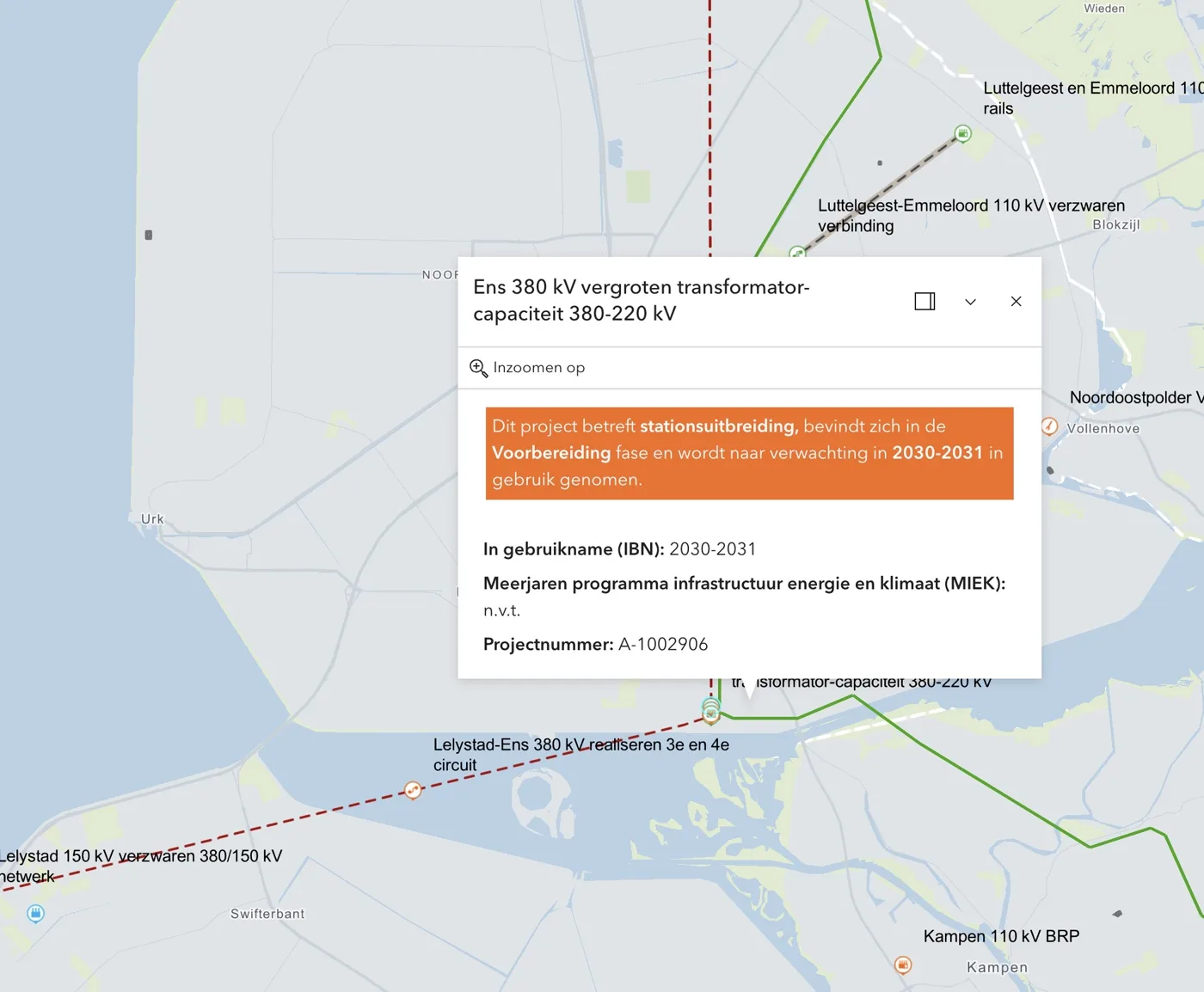
Planned reinforcements, like this 380/220 kV transformer expansion at Ens (in service 2030 to 2031), enter the model in the year they go live
Every plant, every load, at the right substation
Congestion is local, so BirdFlow works at substation level rather than from national totals. It regionalizes demand (electrification, datacenters, industry, EV and heat) down to the individual substation, and places every fossil and renewable plant where it physically connects. Wind and solar production follow real weather years, hour by hour.
- Load growth regionalized to substations
- All fossil plants plus wind, solar and storage
- Weather-based hourly wind and solar profiles
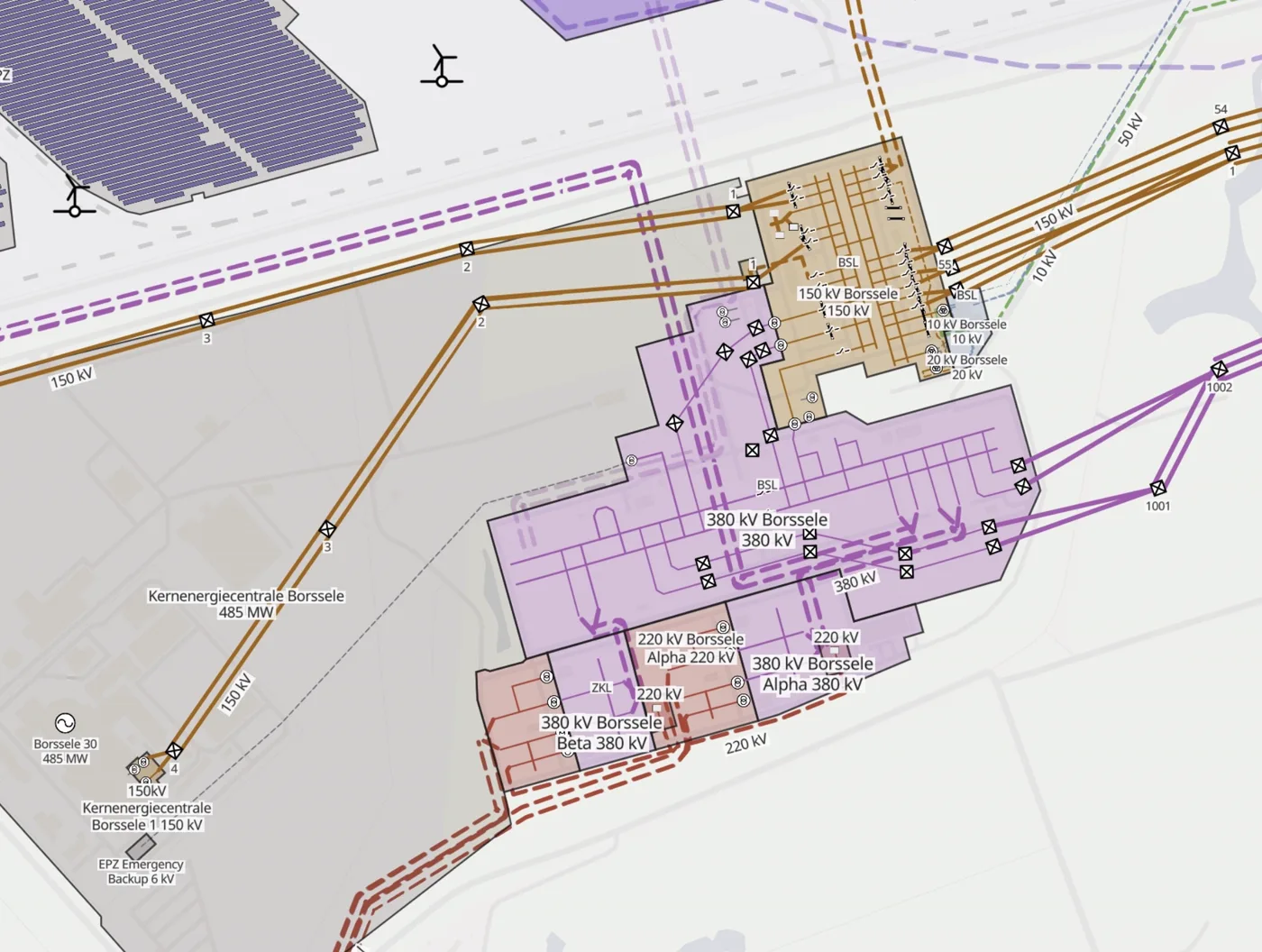
Substation-level detail, here Borssele: 380/220/150 kV yards, the 485 MW nuclear unit and nearby solar, exactly as connected
From power flows to your real restrictions
With topology, demand and generation in place, BirdFlow simulates the resulting power flows for all 8760 hours of every year from 2027 to the horizon you set. Wherever lines or transformers hit their limits, the model derives the congestion that follows, translated into the expected hourly offtake and feed-in restrictions (TDTR, VVTR) for your specific connection point and requested capacity.
- Hourly line loading incl. N-1 security
- Expected restrictions per location and year, 2027 onwards
- Feeds straight into a BESSview business case
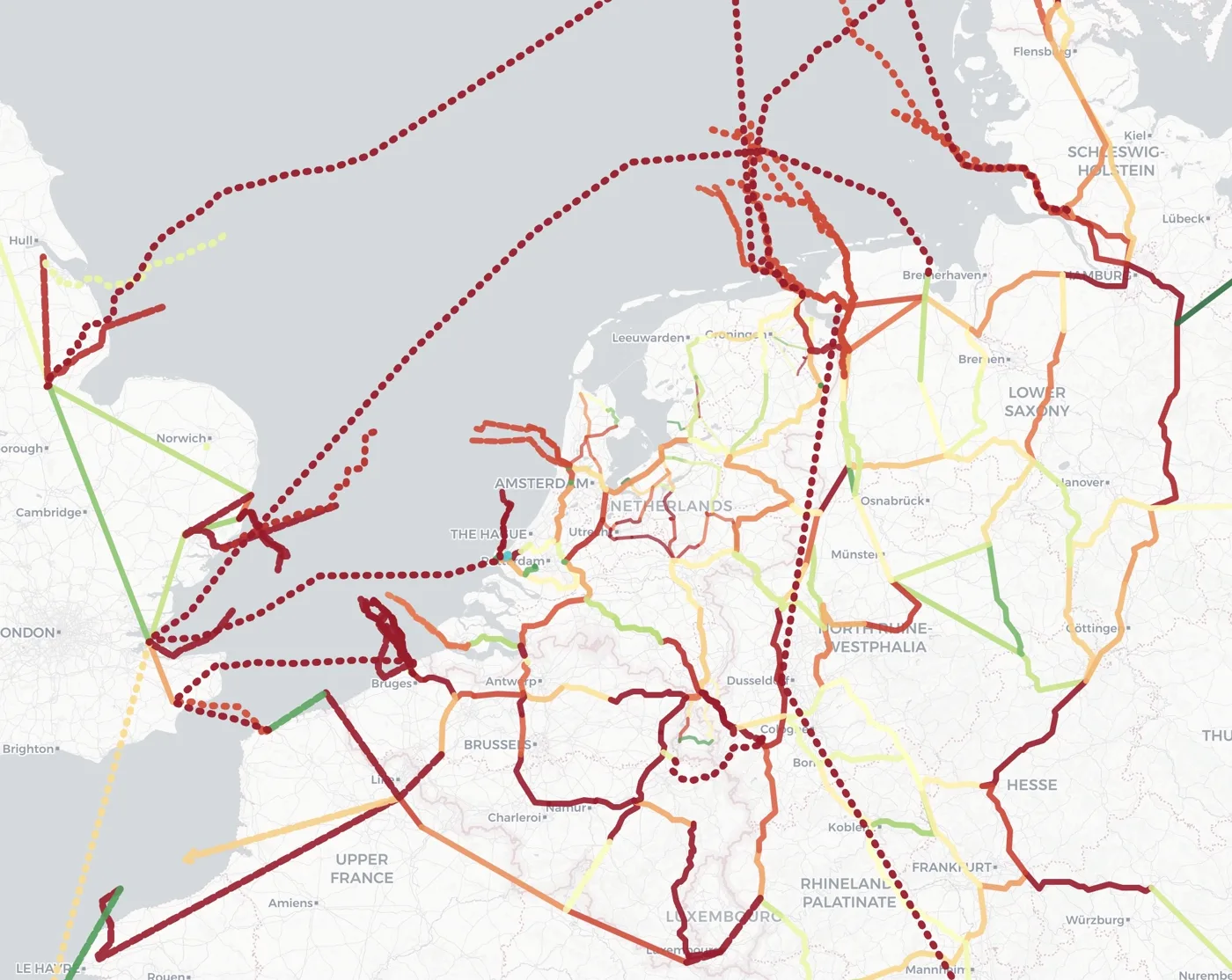
Simulated line loading: green is headroom, red is congestion
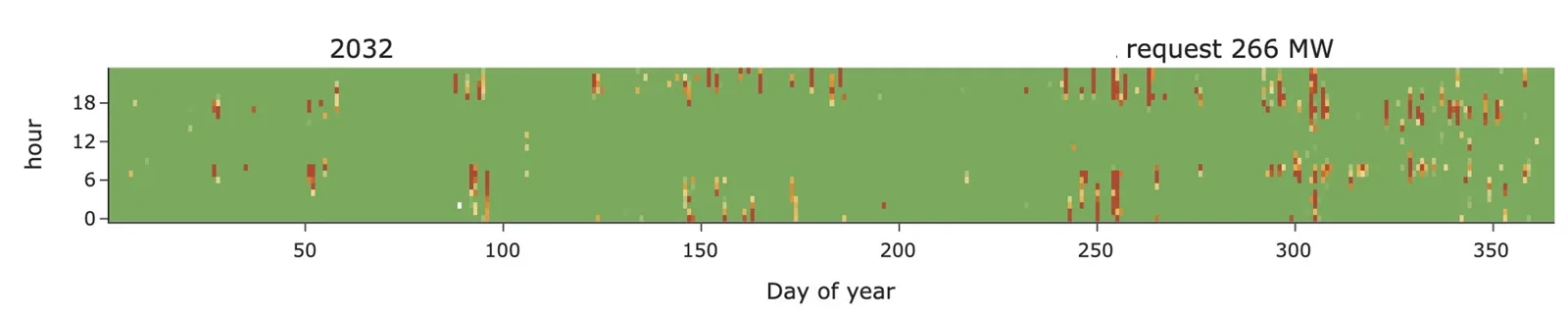
You get an hour-by-hour restriction profile, here a 266 MW request in 2032, green where the grid delivers, red where it restricts
TenneT TDTR and VVTR analysis in the Netherlands
BirdFlow assesses Dutch flexible grid connections by estimating available transport capacity per hour, per connection point and per direction. We apply TDTR or VVTR contract assumptions to compare restricted hours, energy shortfalls and the effect on asset operation.
Netcongestieonderzoek voor flexibele transportrechten: tijdsduurgebonden transportrecht (TDTR) en volledig variabel transportrecht (VVTR). Analyse van beschikbare transportcapaciteit, afnamebeperking en invoedingsbeperking per aansluitpunt.
What is TDTR?
TDTR stands for tijdsduurgebonden transportrecht, a time-duration-bound transport right. It provides the contracted transport capacity during at least 85% of the hours of the year. During the remaining hours, transport can be partially or fully restricted under the applicable terms.
The 85% guarantee concerns hours, not annual energy delivery. BirdFlow estimates when restrictions occur and how deep they are, so a battery or industrial load can be assessed against its operating profile.
What is VVTR?
VVTR stands for volledig variabel transportrecht, a fully variable transport right. Transport depends on available network capacity, without the TDTR minimum-hours guarantee. Availability and eligibility depend on the connection and applicable contract rules.
BirdFlow estimates the hourly available capacity and tests sensitivity to grid upgrades, demand growth and requested MW. This shows how much operating flexibility the project needs when capacity is restricted.
What does a TDTR or VVTR study deliver?
- Hourly available MW for offtake and feed-in, also called afname and invoeding.
- Restricted-hour counts, restriction depth and energy shortfalls, reported separately so partial restrictions remain visible.
- Congestion heatmaps and comparisons across connection points, requested capacities and future grid years.
- Battery sizing and dispatch assessment, with revenue analysis through BESSview.
Is BirdFlow an official TenneT capacity allocation?
No. BirdFlow is Birdview Energy's independent scenario analysis. TenneT determines the transport rights and operational allocations. A study supports project decisions and discussions with the grid operator; it does not award capacity or guarantee a connection date.
For projects with continuous demand, see our datacenter grid connection studies. Belgian connection terms are covered separately in our Elia EDS congestion analysis.
Official background: ACM TDTR decision and ACM proposal to extend VVTR outside congestion areas. The latter describes a proposed extension, not a blanket availability guarantee.
Backtested against published market outcomes
Modelled day-ahead prices are compared with published ENTSO-E outcomes, month by month and across the price duration curve.
Backtested on ENTSO-E market data
Reproducing published day-ahead prices for past years is evidence that the dispatch and merit-order layer behaves correctly; the network layer is validated separately against TenneT capacity data.
The model also follows the build-out as it happens: substations under construction, offshore wind landings, new transformers. Its future years therefore run on the grid that is being built, not on a planning document.
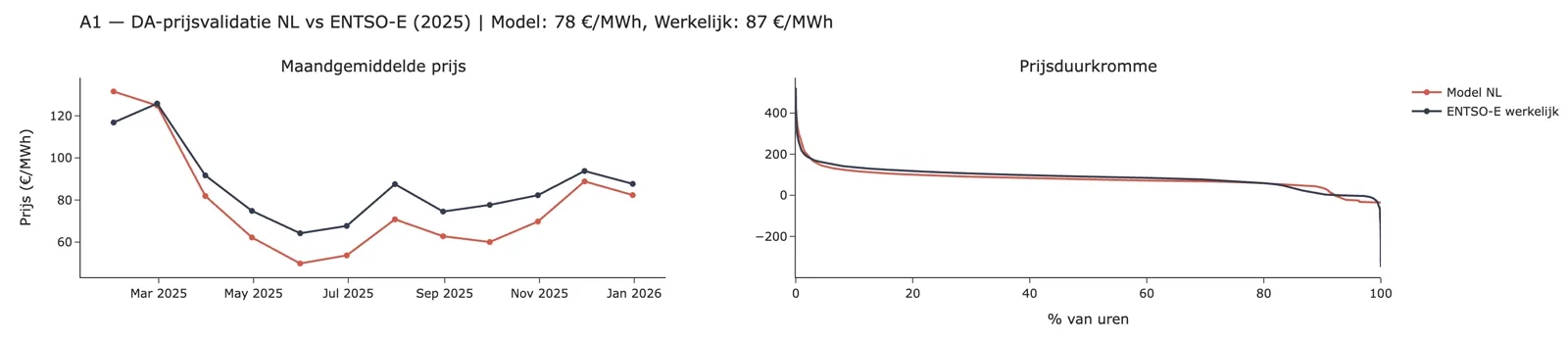
Day-ahead price validation NL: model vs ENTSO-E actuals
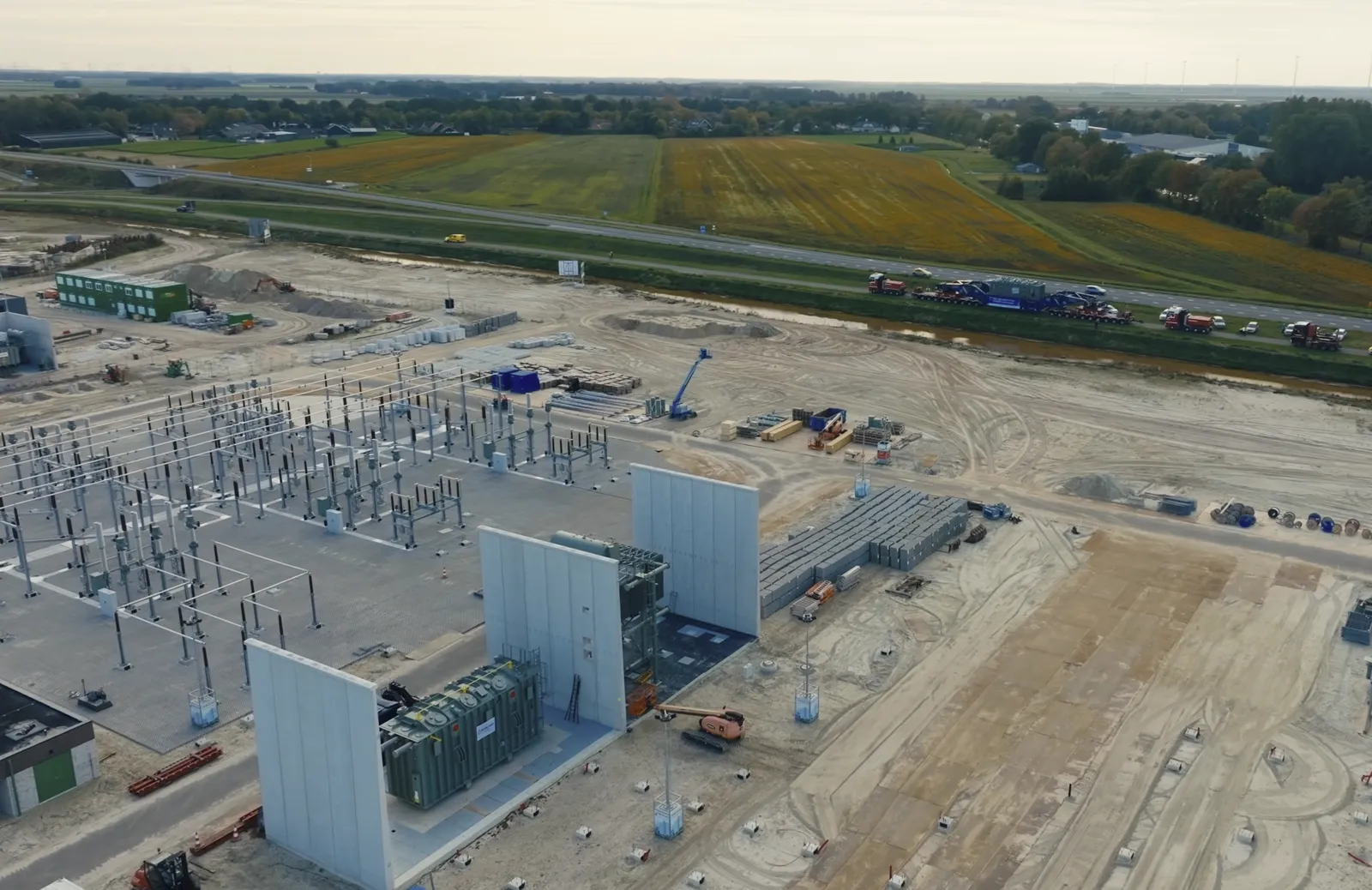
New 380 kV capacity under construction, and already in the model
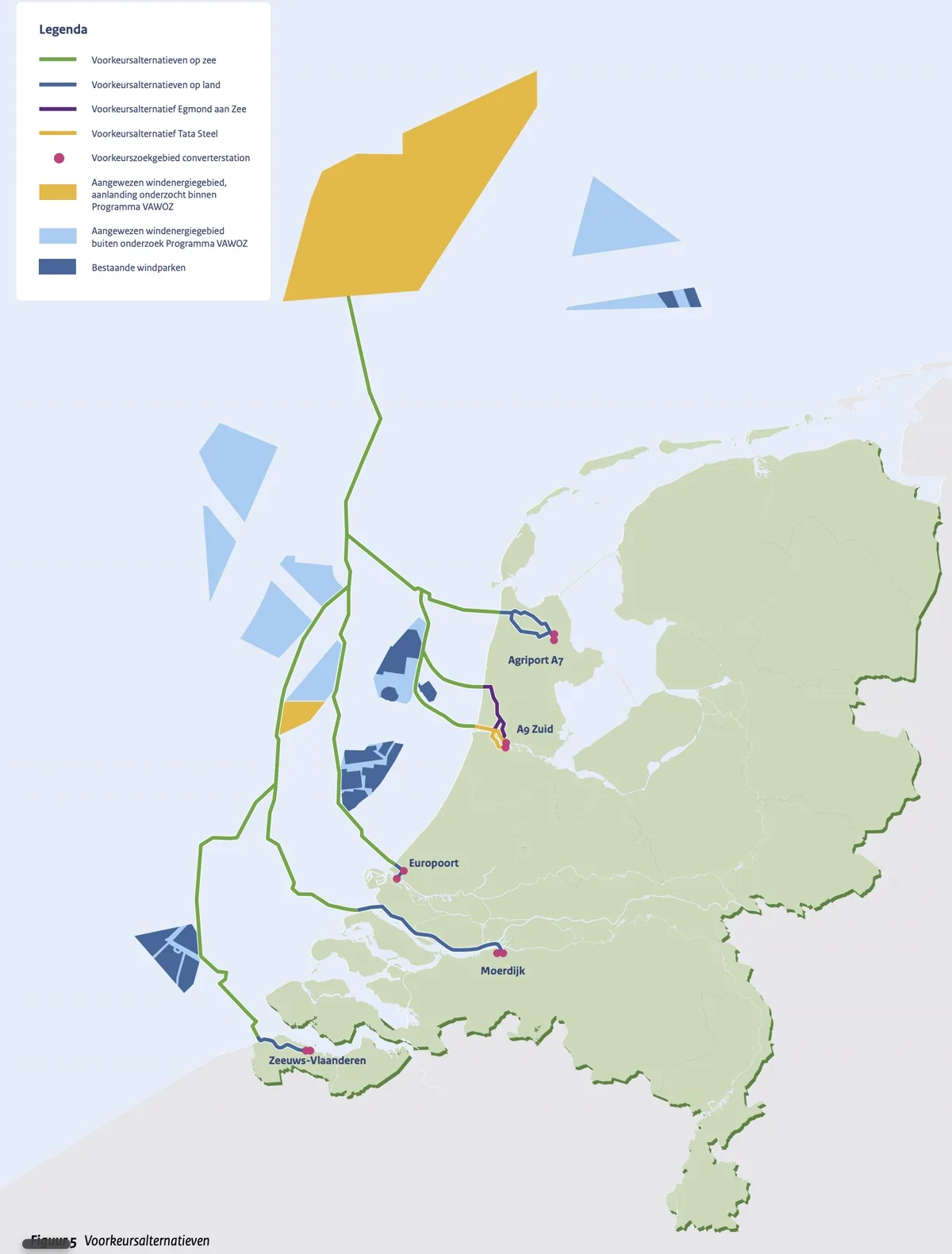
Offshore wind landing routes and converter stations, per scenario year
Built for decisions that depend on the grid
If your project's revenue or expansion hinges on a congested connection, BirdFlow gives you the numbers before you sign.
BESS developers
For a TDTR or VVTR transport agreement, BirdFlow estimates restrictions on charging and discharging separately. BESSview translates those hourly limits into the revenue impact on your battery business case.
Datacenters
Rather than waiting years for firm capacity, see the expected hourly restrictions at candidate locations over your build horizon and size the grid connection, batteries and on-site generation against them. See our datacenter grid connection studies in the Netherlands and Belgium.
Industry
For an electrification or expansion on a congested grid, BirdFlow quantifies when and how often your offtake would be curtailed at each site, and what flexibility or storage would solve it.
Grid studies in practice
Explore Birdview's connection studies and examples of how hourly restrictions inform site selection, load planning and battery sizing.
Datacenter grid connection studies
Our work in the Netherlands and Belgium, with examples showing how IT load, cooling and PUE translate into grid demand, and how batteries and on-site generation cover restricted hours.
Explore datacenter studiesBelgium: Elia EDS congestion analysis
See how we translate Elia's connection-study flexibility parameters into hourly restriction profiles, then assess the energy shortfall and back-up requirements for each grid build-out phase.
Explore the Elia EDS studyGet a BirdFlow analysis for your connection point
Send us the location and the capacity you are requesting, and we will come back with the expected hourly restrictions. Or let us walk you through the model on a live demo.